

Everyone feels nervous before an exam result, a job interview, or a big family decision. That’s part of being human. But for some people the worry doesn’t switch off when the event is over. It follows them to bed, sits in their chest at work, and slowly starts deciding what they will and won’t do.
Stress, anxiety, and panic attacks are often lumped together, yet they behave differently and need different responses. This guide explains how to tell them apart, what you can try on your own, and when it’s time to speak to a psychologist.
Stress, Anxiety, and Panic: How Are They Different?
Stress
Stress is your body’s reaction to a clear demand: a deadline, exam pressure, money worries, or caring for a family member. It usually has an obvious cause, and it eases once the situation is handled or passes. A bad week at work that leaves you tired and short-tempered is stress.
Anxiety
Anxiety is worry or fear that carries on even when there’s no immediate threat. You may find yourself expecting the worst, replaying conversations, or feeling on edge without knowing why. Unlike stress, it doesn’t always leave when the problem does. Over time it can affect sleep, concentration, appetite, and relationships.
Panic Attacks
A panic attack is a sudden surge of intense fear, often with a pounding heart, shortness of breath, dizziness, sweating, trembling, or a feeling that something terrible is about to happen. Most attacks peak within about ten minutes and then settle, but they feel frightening enough that many people worry they’re having a heart attack. Some start avoiding places where an attack happened, which is how panic begins to shrink a person’s world.
Signs It May Be More Than Everyday Worry
You don’t need to tick every box. If several of these sound familiar and have been going on for weeks, it’s worth paying attention:
- Worry that’s hard to switch off, even when you want to
- Racing thoughts or trouble concentrating
- Difficulty falling asleep, or waking up in the early hours with a tight chest
- Avoiding places, people, or situations because of fear
- Repeated panic attacks, or constant fear of having another one
- Physical symptoms such as a fast heartbeat, sweating, stomach upset, or muscle tension
- Slipping performance at college, at work, or in running the home
Why Does Anxiety Develop?
There’s rarely a single cause. Anxiety usually grows from a mix of things: a naturally sensitive temperament, long periods of pressure, a difficult life event, loneliness, poor sleep, too much caffeine, or a health condition. In Kerala, we often see pressure around competitive exams, job insecurity, family expectations, and the distance that comes with a loved one working abroad. None of this means you’re weak. It means your mind has been carrying a heavy load for a long time.
What to Do During a Panic Attack
If you feel one starting, these steps can help you ride it out:
- Remind yourself that this is a panic attack, it’s uncomfortable but not dangerous, and it will pass.
- Sit down if you can, and loosen anything tight around your neck or waist.
- Breathe in gently through your nose for four counts and out slowly for six. The longer exhale is what helps your body settle.
- Ground yourself by naming five things you can see, four you can touch, three you can hear, two you can smell, and one you can taste.
- Don’t fight the sensations. Let them rise and fall. Fighting them usually makes them stronger.
Everyday Habits That Ease Anxiety
Keep a steady routine
Regular meals, a fixed bedtime, and a short daily walk give your body a rhythm to rely on. Anxious minds do better with predictability.
Cut back on caffeine
Strong tea, coffee, and energy drinks can mimic anxiety symptoms like a racing heart and jitteriness. Try reducing them, especially after lunch.
Move your body
A brisk walk, cycling, or a simple home workout burns off the tension that anxiety builds up.
Talk to someone you trust
Saying your worries out loud to a friend or family member often makes them feel smaller. You don’t need them to fix anything. Being heard is enough.
When to Seek Anxiety Counselling in Kerala
A good rule of thumb: talk to a psychologist if worry or fear has been present on most days for a few weeks or longer, and it’s affecting your sleep, work, studies, or relationships. You should also reach out if you’re avoiding things you used to do, if panic attacks keep returning, or if you’ve simply tried to manage it alone and it isn’t getting better.
One important point: if you’re having chest pain, breathlessness, or palpitations for the first time, see a doctor first. A physical check helps rule out heart, thyroid, or other medical causes, and then counselling can focus on what’s left.
What Happens in a Counselling Session?
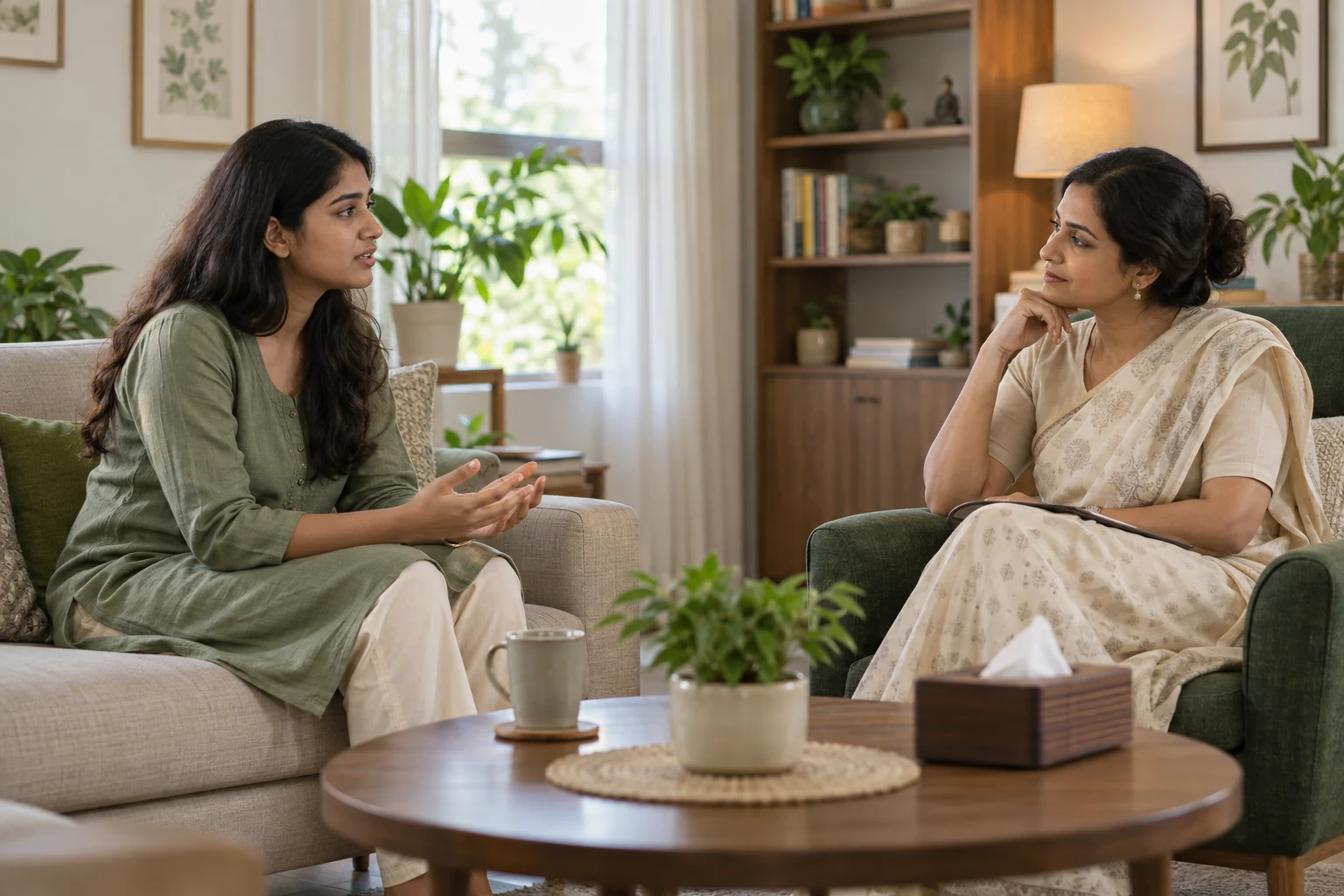
Many people hesitate because they don’t know what to expect. The first session is mainly a conversation. The psychologist listens to what you’re experiencing, asks about your sleep, routine, health, and life situation, and together you decide what kind of support fits you best.
Treatment for anxiety often uses approaches like cognitive behavioral therapy (CBT), which helps you notice and change anxious thought patterns, along with relaxation and breathing techniques and gradual exposure to situations you’ve been avoiding. The pace is set with you, and you can ask questions at any point. Sessions are available online and in person.
Anxiety Counselling in Kerala at Hello Mind
If anxiety, stress, or panic is getting in the way of your life, you don’t have to work it out alone. Our psychologists offer anxiety counselling in Kerala, online and in person, at our Manjeri and Calicut clinics. Share a few details and our care team will help you find the right person to talk to. You can also stay anonymous when you request a callback.
Professional therapy provides clear, evidence-based tools tailored to your individual needs, helping you move from coping with symptoms to truly thriving.